1. Introduction / 저승사자란?
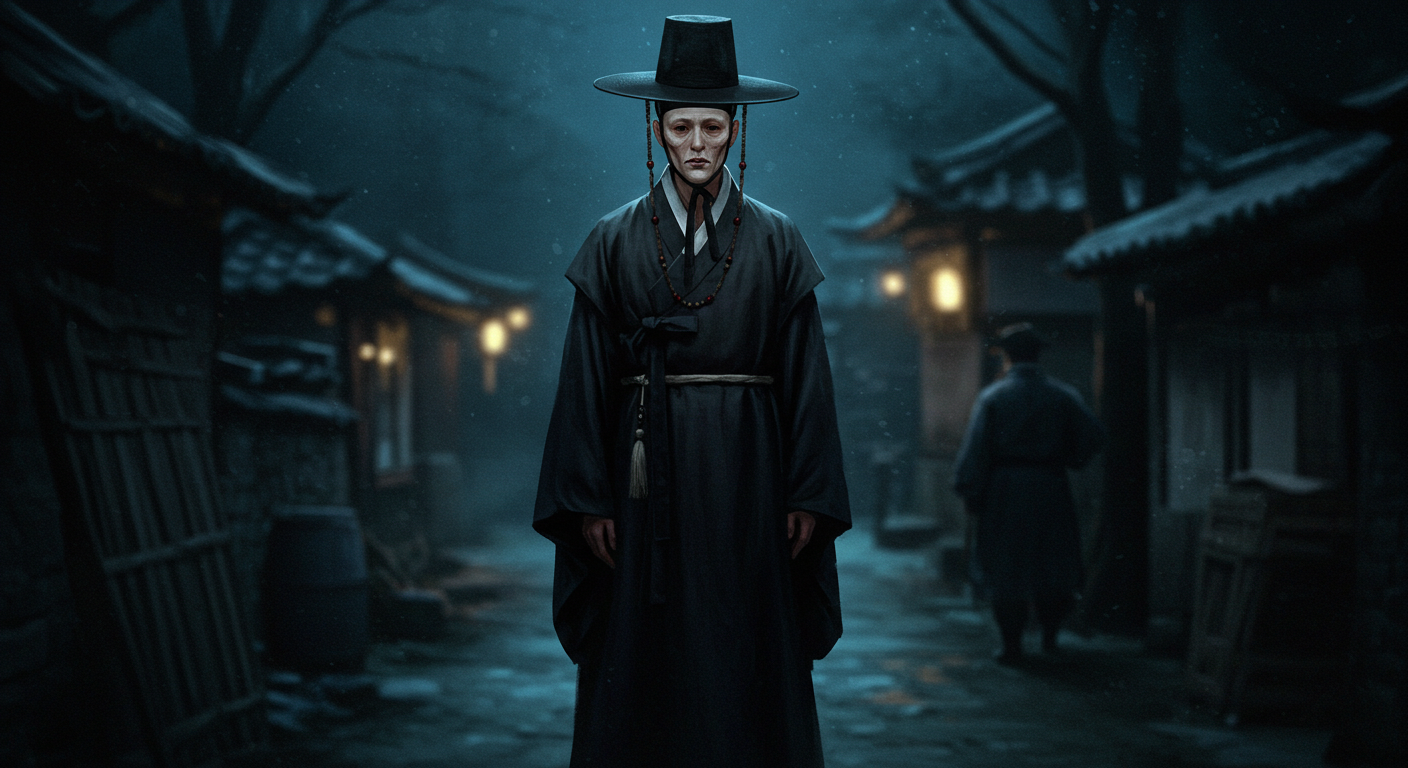
Imagine walking through a quiet Korean village at night. The air is heavy, the only sound is the creak of wooden doors, and in the shadows you sense a silent figure watching. He is not a ghost, not a demon, but something more orderly, more inevitable — the Jeoseungsaja (저승사자), the Korean Grim Reaper, now often connected globally with the term K-Demon.
한국의 저승사자는 단순히 죽음을 두려움으로만 그리지 않습니다. 그는 혼령을 잡아가려는 악마가 아니라, “죽은 이를 저승(Underworld)으로 안내하는 사신(死神)”이자 “영혼의 길잡이(Spirit Guide)”로 등장합니다. 사람들은 마지막 순간, 흰옷 또는 검은 도포를 입고 갓을 쓴 저승사자가 나타나 망자를 정중히 데려간다고 믿었습니다.
Unlike the Western Grim Reaper, who is often shown as a terrifying skeleton with a scythe, the Korean Jeoseungsaja is calmer, more restrained, and deeply rooted in Confucian and Buddhist ideas of balance, duty, and justice. He does not come to torture or punish, but to escort souls to the afterlife with dignity.
서양의 Grim Reaper가 커다란 낫을 든 해골의 모습으로 죽음을 공포로만 그린다면, 한국의 저승사자는 훨씬 차분하고 절제된 모습입니다. 그는 망자를 괴롭히거나 심판하기 위해 오는 것이 아니라, 죽음 이후의 세계로 안내하는 존재로 받아들여졌습니다.
Today, the Jeoseungsaja (저승사자, Korean Grim Reaper) has become one of the most iconic figures in Korean folklore, mythology, and K-Culture. From ancient folk tales whispered in villages, to dramatic appearances in K-Dramas like Goblin (도깨비), to stylish reinterpretations in webtoons and games, the Jeoseungsaja — often called K-Demon (케데헌, KPDH, KDH) in global fandoms — continues to capture the imagination of audiences worldwide. He stands as a cultural bridge, linking K-Mythology with modern creativity, proving that even the reaper can shine as a star of K-Culture.
오늘날 '저승사자(Jeoseungsaja, Korean Grim Reaper)'는 한국의 민속·신화·K-컬처를 대표하는 아이코닉한 존재로 자리 잡았습니다. 전통 설화와 장례 문화에서부터 K-드라마 〈도깨비〉 속 매혹적인 캐릭터, 웹툰과 게임의 현대적 재해석, 그리고 글로벌 팬덤에서 '케데헌(K-Demon, KPDH, KDH)'이라 불리며 주목받는 캐릭터까지 — 저승사자는 여전히 전 세계인이 매혹되는 K-Mythology의 핵심 아이콘으로 살아 있습니다. 그는 과거와 현재를 잇는 문화적 다리이자, K-컬처 속에서 가장 독창적으로 재탄생한 한국적 사신의 상징입니다.
2. Origin & History / 기원과 역사
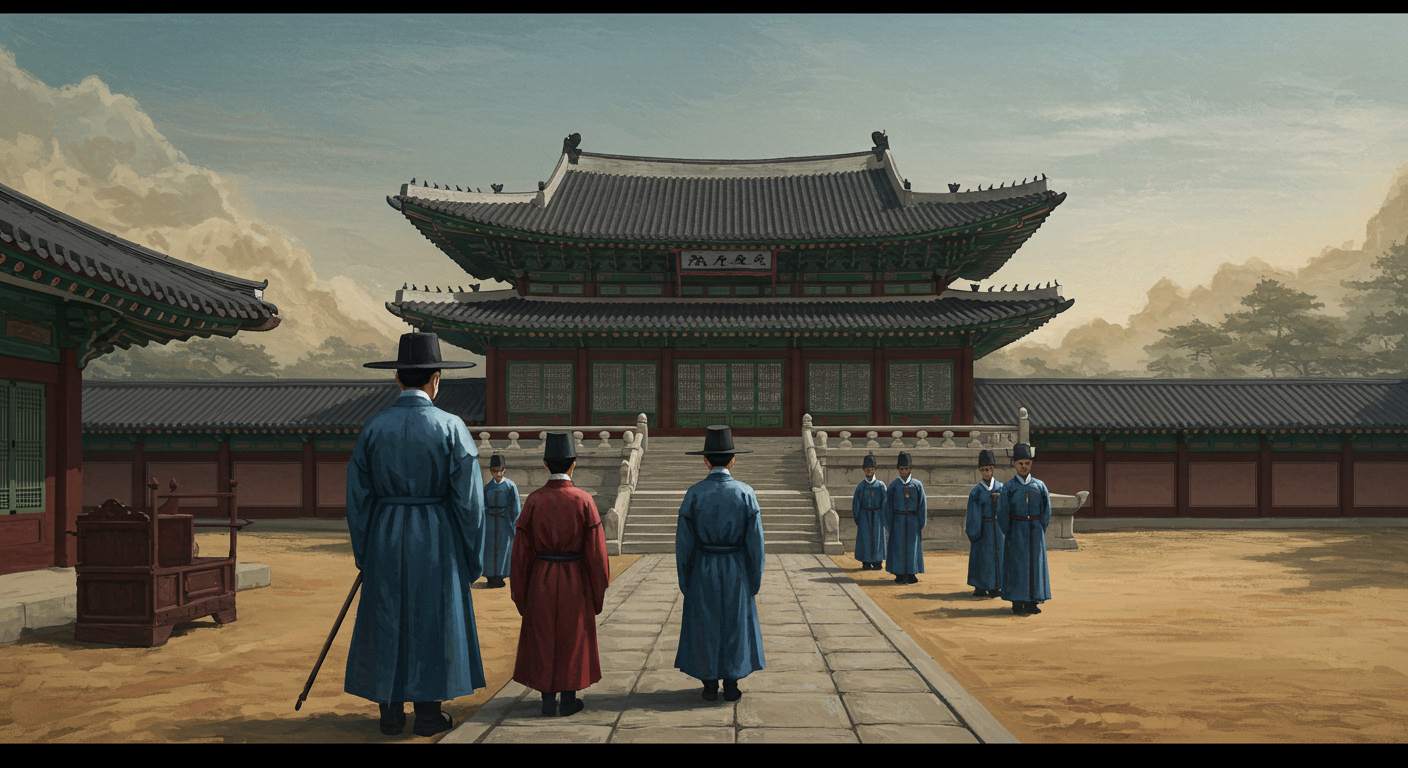
Long before Netflix dramas and webtoons, Koreans already shared countless stories about death and the afterlife. In the flicker of oil lamps, elders whispered of the Jeoseungsaja (저승사자, Korean Grim Reaper — today often reimagined as part of K-Demon mythology), the solemn envoy who appeared at the moment of death to guide souls across the threshold.
오늘날처럼 드라마와 웹툰이 없던 시절에도, 한국 사람들은 죽음과 저승에 대한 수많은 이야기를 나누었습니다. 등잔불 아래서 어른들은 죽음을 맞이하는 순간 나타나 망자를 데려가는 저승사자의 이야기를 속삭이며 아이들에게 전해주었지요. 이 이야기는 세대를 거듭해 내려오며, 지금은 '케데헌(K-Demon, KPDH, KDH)'이라는 이름으로도 글로벌 팬덤 속에서 회자되고 있습니다.
Early Roots in Korean Belief
The concept of the Jeoseungsaja first emerged during the Three Kingdoms period (삼국시대, about 1,900–1,300 years ago) and later evolved with the spread of Buddhism and Taoism in Korea. In Buddhist texts, the souls of the dead stood before the Ten Kings of the Underworld (시왕, Siwang), while the Jeoseungsaja served as their envoy (사자), escorting spirits to the judgment of King Yeomna (염라대왕, Yama).
저승사자의 개념은 '삼국시대(약 1,900~1,300년 전)'에 싹트기 시작했고, 불교와 도교의 전래를 거치며 구체화되었습니다. 불교 경전 속에서 망자는 시왕(十王, 저승의 열 명의 왕) 앞에서 심판을 받으며, 저승사자는 이들을 '염라대왕(Yama)'의 재판장으로 인도하는 사자로 등장합니다. 이러한 전통적 서사는 오늘날 K-Demon 세계관 속에서도 중요한 기반이 되고 있습니다.
The Role of the “Three Envoys” (삼사자)
In Korean folk tradition, the Jeoseungsaja were not always alone. Legends often mention the Three Envoys (삼사자):
- Iljik Chasa (일직차사) – envoy of the sun
- Woljik Chasa (월직차사) – envoy of the moon
- Gangrim Doryeong (강림도령) – the noble reaper, most famous in shamanic rituals
한국 민간 신앙에서는 저승사자가 홀로 등장하지 않고, **삼사자(三使者)**로 편성되기도 했습니다.
- 일직차사 – 낮의 사신
- 월직차사 – 밤의 사신
- 강림도령 – 무속 신앙에서 가장 널리 불리던 고귀한 저승사자
이 세 명의 사신은 죽음을 질서 있게 관리하며, 누구도 피할 수 없는 운명의 질서를 상징했습니다. 현대 판타지 게임과 웹툰에서는 이 “삼사자” 개념이 종종 K-Demon 캐릭터 시스템으로 변형되어 등장하며, 전통과 현대적 상상력이 만나 새로운 매력을 만들어내고 있습니다.
Evolution Through Joseon and Folk Tales
During the Joseon Dynasty, stories of the Jeoseungsaja became woven into both Confucian family rituals and shamanic rites (굿). Folk tales described them as polite yet firm — knocking at the door when one’s time had come, or appearing at night in dreams. They were not villains but necessary guides of cosmic balance, reminding listeners that life and death were part of a greater order.
조선시대에 이르러 저승사자의 이야기는 유교적 제례와 무속 신앙의 굿 속에 깊이 자리 잡았습니다. 민담 속의 저승사자는 언제나 공손하지만 단호한 모습으로, 때로는 죽음이 다가올 때 대문 앞에 찾아오거나, 꿈속에 나타나 신호를 주는 존재로 묘사되었습니다. 그들은 악인이 아니라, 삶과 죽음의 질서를 지키는 안내자였습니다. 이런 이미지들은 지금의 케데헌(K-Demon, KPDH, KDH) 서사 속에서도 그대로 변주되며 살아남았습니다.
3. Appearance & Characteristics / 외형과 특징
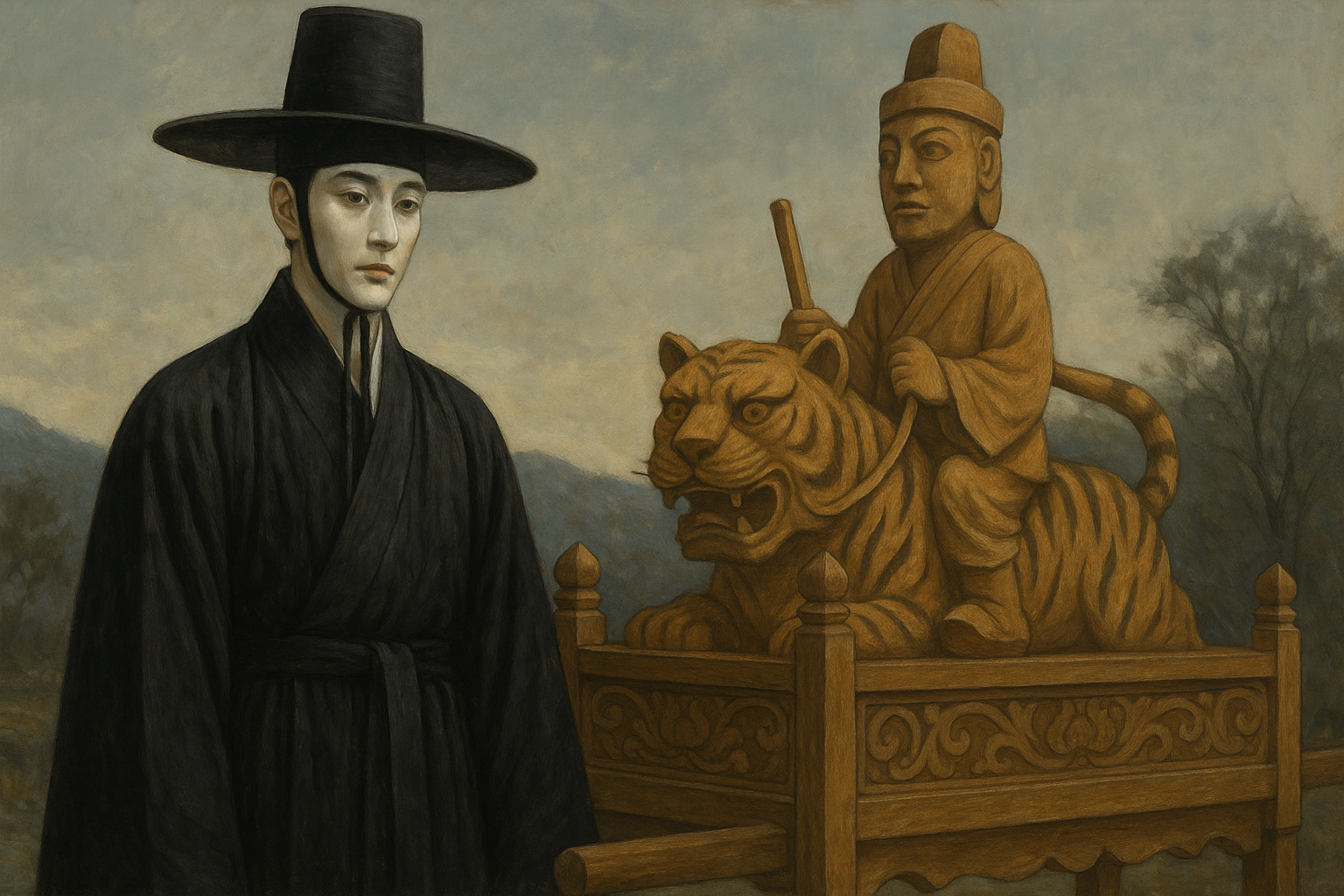
Ask a Korean about the Jeoseungsaja (저승사자, Korean Grim Reaper — today often linked globally with K-Demon mythology), and most will describe the same image: a tall, solemn figure in a black gat (갓, traditional Korean hat) and a flowing dopo (도포, robe), with a pale, expressionless face, silently carrying out his duty.
한국 사람들에게 저승사자의 모습을 묻는다면 대부분 이렇게 대답할 겁니다. 검은 갓과 도포를 입은 장신의 인물, 창백한 얼굴에 무표정한 눈빛으로 묵묵히 임무를 수행하는 존재. 이 이미지는 전통 설화 속에서도 반복되었고, 오늘날 케데헌(K-Demon, KPDH) 콘텐츠 속에서도 재현되며 전 세계 팬덤에 각인되고 있습니다.
Clothing and Colors
Unlike the Western Grim Reaper, who appears as a skeleton in a tattered cloak wielding a scythe, the Korean Jeoseungsaja’s image is rooted in traditional attire. The black gat and dopo symbolize dignity and inevitability. In some folktales, he appears in white hemp funeral robes, symbolizing purity and the final passage.
서양의 사신이 낫과 해골로 공포를 강조한다면, 한국의 저승사자는 전통 복식에 뿌리를 두고 있습니다. 검은 갓과 도포는 장엄함과 피할 수 없는 운명을 상징하고, 때로는 흰 삼베 수의 차림으로 등장해 순수한 이별을 표현하기도 했습니다. 이런 전통적 복식은 최근 글로벌 웹툰·게임 속 K-Demon 비주얼 아이콘으로 자주 재해석되고 있습니다.
Folk Art and Artifacts
Evidence of the Jeoseungsaja also appears in funeral artifacts and wooden carvings. In traditional funeral biers (sangyeo), craftsmen often carved figurines of reapers wearing gats, sometimes even riding tigers. These figures, called sajang (사자상), symbolized that the deceased was properly escorted to the afterlife.
저승사자의 흔적은 상여 장식의 사자상(使者像) 같은 장례 유물 속에서도 확인됩니다. 갓을 쓴 사신의 목각상, 혹은 호랑이를 타는 모습으로 표현되며 망자를 동행했습니다. 이는 저승사자가 괴물이 아니라, 망자를 위한 정당한 배웅의 동반자로 여겨졌음을 보여줍니다. 현대 K-Demon 디자인에서도 이 목각 전통이 차용되며, 전통과 현대 콘텐츠가 연결되고 있습니다.
Personality and Traits
Stories portray the Jeoseungsaja as calm, dutiful, and incorruptible. Unlike trickster spirits like dokkaebi, they rarely played pranks. Their mission was clear: when a soul’s time had come, they would appear at the door — never early, never late. In some tales, if bribed or deceived, they might leave — but only for a short while, for no one can escape fate forever.
민담 속 저승사자는 언제나 차분하고, 성실하며, 결코 매수되지 않는 존재로 묘사됩니다. 도깨비처럼 장난을 치지도 않았고, 임무는 언제나 분명했습니다. 망자의 시간이 다가오면 정확히 찾아와, 늦지도 빠르지도 않게 데려가는 존재. 일부 이야기에서는 뇌물이나 꾀로 잠시 피할 수 있었다고 하지만, 결국 운명은 피할 수 없다는 교훈을 담고 있습니다. 이러한 엄격하고 흔들림 없는 캐릭터성은 현대의 케데헌(K-Demon, KPDH, KDH ) 서사에서도 유지되며, 글로벌 팬덤에 ‘공정한 사신’의 이미지를 각인시키고 있습니다.
4. Cultural Role / 의례·신앙
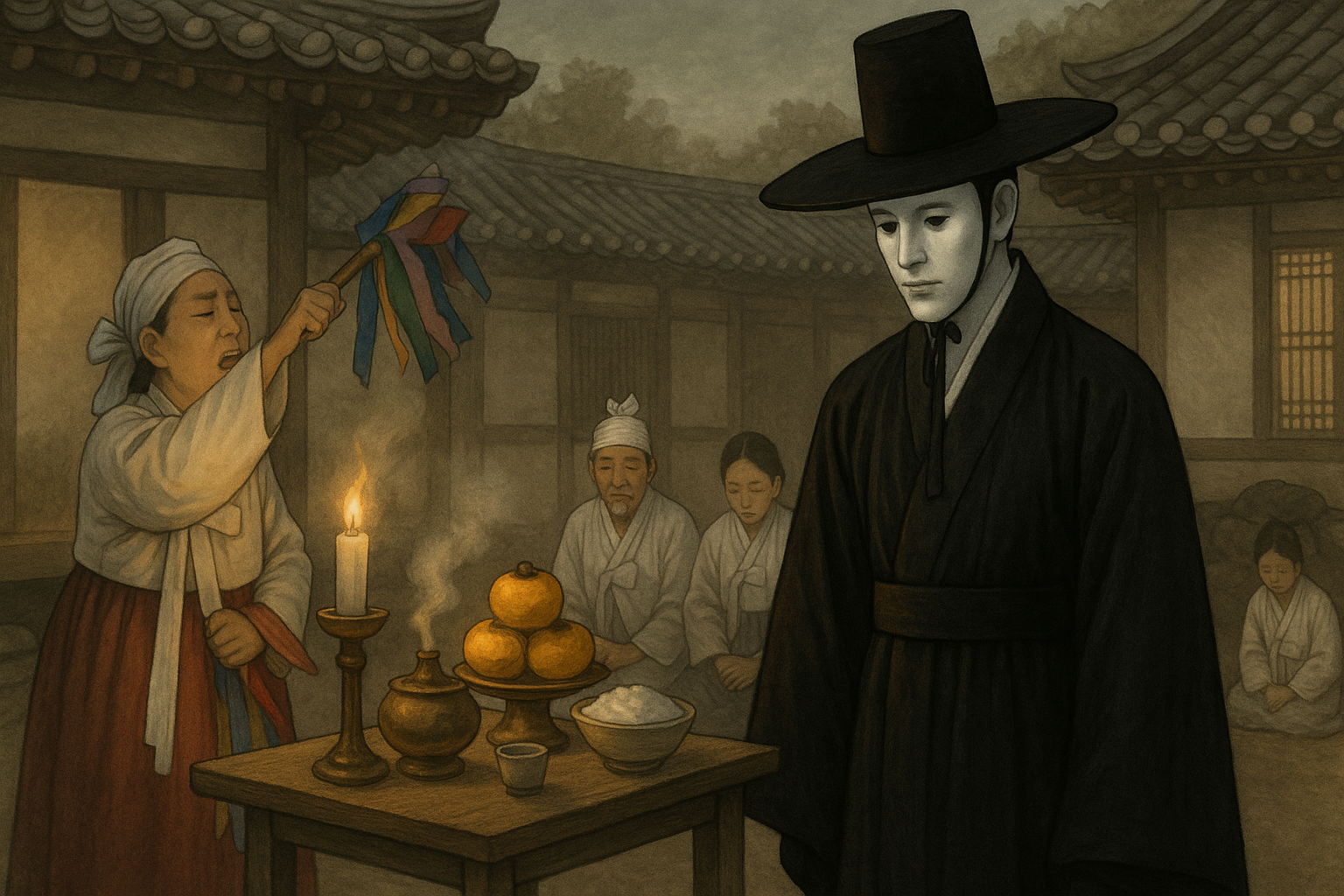
In Korean villages of the past, death was not a private matter but a communal ritual. When someone passed away, people believed that the Jeoseungsaja (저승사자, Korean Grim Reaper — today often referred to as K-Demon in global fandoms) would arrive to escort the soul. Families prepared not only for the funeral but also for the proper reception of this otherworldly envoy.
옛 한국의 마을에서 죽음은 개인만의 일이 아니라 마을 전체가 함께 치르는 의례였습니다. 누군가 세상을 떠나면 반드시 저승사자가 나타나 영혼을 데려간다고 믿었습니다. 그래서 상가(喪家)는 망자뿐 아니라 ‘저승사자(케데헌, K-Demon)’라는 초월적 사신을 맞이하기 위한 준비도 했던 것이지요.
Sajang (사자상) – The Reaper’s Figurines
Funeral biers (sangyeo) were often decorated with wooden figurines of Jeoseungsaja, known as sajang (사자상). These carvings symbolized the reaper accompanying the deceased on their final journey. In some regions, he was even depicted riding a tiger — a striking image of authority and protection.
전통 상여에는 ‘사자상(使者像)’이라 불리는 저승사자의 목각 인형이 장식되었습니다. 이는 망자의 길을 함께하는 동반자의 의미였지요. 일부 지역에서는 호랑이를 탄 사신으로 표현되어 저승길의 위엄과 권위를 상징하기도 했습니다. 오늘날 이 모티프는 글로벌 애니메이션과 게임 속 K-Demon 캐릭터 디자인의 영감으로도 활용되고 있습니다.
Welcoming the Reaper at the Yard
In folk belief, the Jeoseungsaja had to be treated with courtesy — but not excessively. Families set up a small offering table, called the saja-sang (사자상), usually in the yard or at the gate. It was forbidden to place it inside the house, as that could invite misfortune. The reaper was seen as a guest: respected, but also feared.
민간 신앙에서는 저승사자를 반드시 예우하되, 지나치게 모셔서는 안 된다고 여겼습니다. 그래서 상가에서는 대문 앞이나 마당에 ‘사자상(供桌)’을 차려야 했고, 집 안으로 들이면 화를 불러온다고 믿었습니다. 저승사자는 존경받는 손님이면서도 조심스러운 손님이었던 셈입니다. 이런 양가적 태도는 오늘날 케데헌(K-Demon, KPDH, KDH) 서사 속에서도 ‘경외하지만 두려운 존재’라는 이미지로 이어집니다.
Shamanic Rituals and Village Beliefs
In shamanic rituals (gut, 굿), the Jeoseungsaja often appeared as an intermediary between the living and the dead. Shamans invoked his image when guiding lost spirits or preventing premature death. Some villages even held communal rites to appease the reaper, especially after epidemics or frequent fires, believing that only through ritual respect could disaster be avoided.
무속 신앙의 굿에서도 저승사자는 중요한 존재였습니다. 무당은 길 잃은 혼령을 인도하거나 요절을 막을 때 저승사자의 형상을 불러들였습니다. 어떤 마을은 역병이나 화재가 잦을 때 저승사자에게 제를 올리는 마을 제의를 열었고, 이를 통해 재앙을 피할 수 있다고 믿었습니다. 이러한 믿음은 단순한 민속이 아니라, 저승사자가 공동체 질서를 지키는 K-Demon 의례적 캐릭터로 발전하게 된 배경이기도 합니다.
5. Modern Adaptation / 현대 재해석
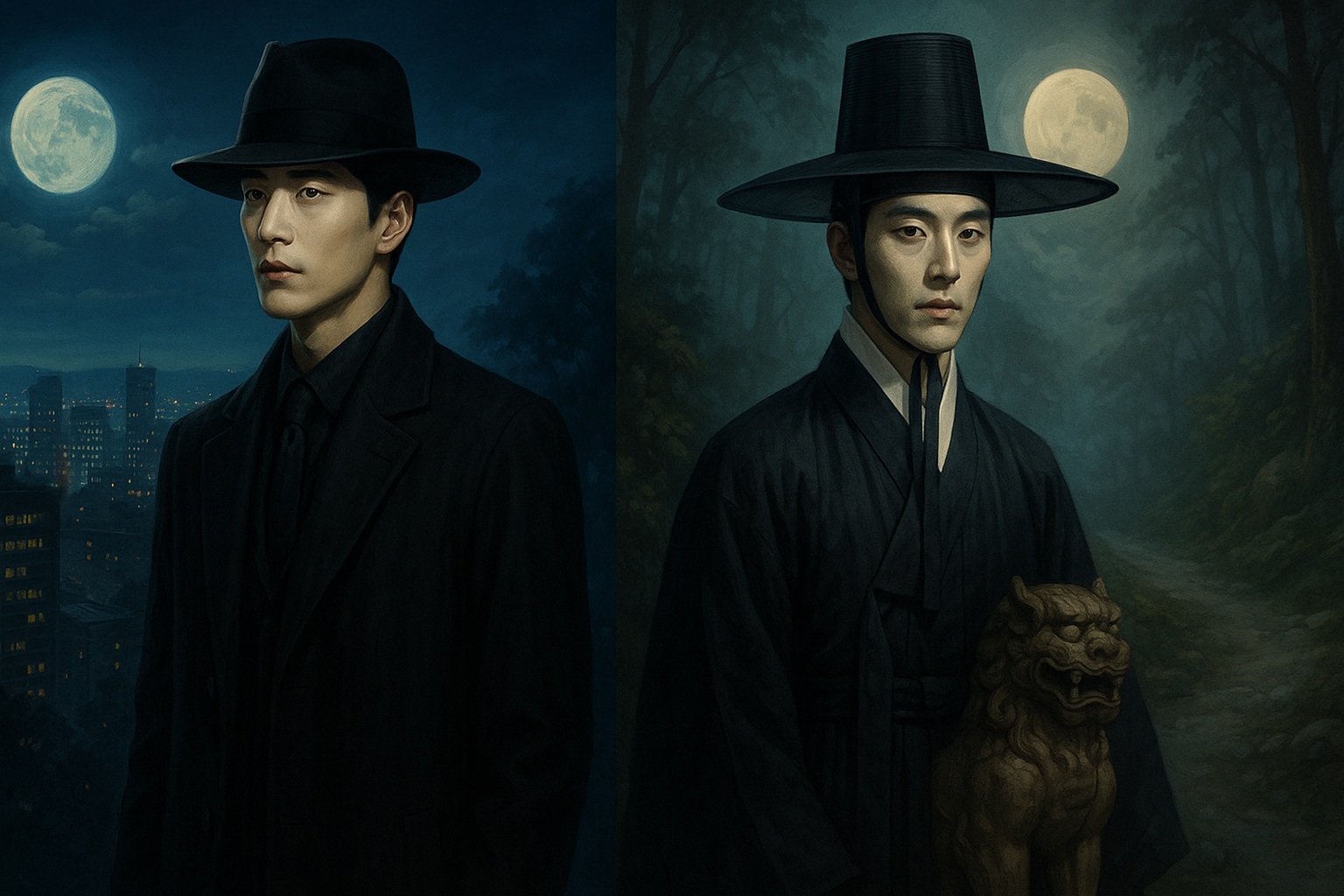
For centuries, the Jeoseungsaja (저승사자, Korean Grim Reaper — today often connected with K-Demon in global fandoms) existed only in folktales and funeral rites. But in the modern era, this once-feared figure has stepped into the spotlight of K-Culture and global pop culture, transforming into a charismatic icon that fascinates audiences far beyond Korea.
수백 년 동안 저승사자는 설화와 장례 풍습 속에서만 존재했습니다. 그러나 현대에 들어 그는 K-컬처와 글로벌 대중문화의 무대 위로 올라서, 한국을 넘어 전 세계 사람들을 매혹시키는 상징으로 재탄생했습니다.
K-Dramas: From Fear to Romance
The most famous modern portrayal is the 2016 hit K-Drama “Goblin (도깨비)”, where actor Lee Dong-wook reimagined the Grim Reaper not as a faceless phantom but as a stylish, melancholy figure in a black coat and fedora. This version captivated millions of viewers across Asia and beyond, proving that even a spirit of death could become a beloved character in K-Drama storytelling.
저승사자의 현대적 재탄생을 가장 강렬히 보여준 사례는 2016년 방영된 K-드라마 **〈도깨비〉**였습니다. 배우 이동욱이 연기한 저승사자는 무표정한 사신이 아니라, 세련된 옷차림과 쓸쓸한 매력을 지닌 캐릭터로 재해석되었고, 수많은 팬들의 사랑을 받으며 죽음의 사신조차도 글로벌 K-컬처의 로맨틱 아이콘이 될 수 있음을 입증했습니다.
Webtoons & Games: The Stylish Reaper
In Korean webtoons and online games, the Jeoseungsaja is frequently reborn as a sleek warrior, a mysterious guide, or even a sympathetic anti-hero. With anime-inspired visuals, their black robes and pale faces appeal to younger audiences worldwide, blending tradition with fantasy in a way that resonates with the digital generation of K-Mythology fans.
한국의 웹툰과 게임 속에서도 저승사자는 빈번히 등장합니다. 그는 카리스마 넘치는 전사, 신비로운 안내자, 때로는 동정 어린 안티히어로로 재탄생하며, 젊은 세대와 해외 팬들의 마음을 사로잡습니다. 검은 도포와 창백한 얼굴은 애니메이션적 감각으로 새롭게 표현되어, 전통과 판타지를 결합한 K-Mythology 캐릭터로 자리잡고 있습니다.
K-Demon & Global Pop Culture
In modern projects like K-Demon (케데몬), the Jeoseungsaja is no longer just a figure of fear, but a charismatic cornerstone of Korean mythology in global culture. Here, reapers appear alongside dokkaebi (도깨비), gumiho (구미호, nine-tailed foxes), and other mythical beings, forming a modern pantheon that fascinates international audiences. This fusion of folklore and entertainment has elevated the Jeoseungsaja into a true cultural ambassador of K-Mythology.
케데몬(K-Demon) 같은 현대 프로젝트에서 저승사자는 더 이상 공포의 상징만이 아닙니다. 그는 도깨비, 구미호 등 한국 신화 속 존재들과 어깨를 나란히 하며, 글로벌 팬덤이 열광하는 현대적 세계관의 카리스마 있는 캐릭터로 재해석됩니다. 이처럼 전통 설화와 현대 엔터테인먼트의 융합은 저승사자를 한국적이면서도 세계 보편적으로 공감할 수 있는 상징으로 발전시켰습니다.
6. Conclusion / 결론

From the shadowy paths of old Korean villages to the glowing screens of modern K-Dramas, webtoons, and K-Demon projects, the Jeoseungsaja (저승사자, Korean Grim Reaper) has never truly disappeared. He has simply changed form — from a solemn envoy in funeral rites, to a stylish icon in dramas, to a charismatic mythological figure reshaped for global audiences in K-Mythology.
옛 마을의 어두운 길에서부터 오늘날 K-드라마, 웹툰, 그리고 케데몬(K-Demon) 같은 세계관까지, 저승사자는 결코 사라진 적이 없습니다. 다만 시대마다 다른 모습으로 변모하며 이어져 왔을 뿐이지요. 장례의식 속 차가운 사신에서, 드라마 속 세련된 캐릭터로, 그리고 글로벌 팬덤이 사랑하는 현대적 아이콘으로 확장되었습니다.
A Spirit of Adaptation
What makes the Jeoseungsaja remarkable is not only his role as a reaper of souls, but his ability to adapt. Each generation retold his story in ways that reflected their fears, hopes, and imaginations. Through this evolution, the Jeoseungsaja became more than a folkloric figure — he is now a symbol of Korean cultural identity, bridging tradition and modern creativity.
저승사자가 특별한 이유는 단순히 영혼을 거두는 역할 때문만이 아닙니다. 세대를 거치며 시대의 두려움과 희망, 상상력을 담아내며 계속 새롭게 태어났다는 점에 있습니다. 이렇게 저승사자는 단순한 민속을 넘어 한국 문화 정체성의 상징이 되었고, 전통과 현대를 잇는 다리로 자리잡았습니다.
Global Legacy of the Korean Grim Reaper
Today, when people around the world search for the Korean Grim Reaper or encounter the Jeoseungsaja in K-Dramas, games, or K-Demon content, they are not just meeting a character. They are connecting with centuries of belief, ritual, and art.
오늘날 전 세계 사람들이 Korean Grim Reaper를 검색하거나 K-드라마, 게임, 케데몬 콘텐츠 속 저승사자를 만날 때, 그들은 단순한 캐릭터를 보는 것이 아닙니다. 그것은 수백 년 동안 이어져 온 믿음, 의례, 예술과 연결되는 경험입니다. 저승사자는 우리에게 죽음이 단순한 끝이 아니라, 존엄과 신비, 그리고 때로는 아름다움까지 담을 수 있는 이야기임을 일깨워 줍니다.
'K-History & Tradition' 카테고리의 다른 글
| Why Did Tigers Disappear from Korea? / 한국에서 호랑이가 사라진 이유 (1) | 2025.09.23 |
|---|---|
| Gumiho (구미호) — The Nine-Tailed Fox, A K-Culture Icon (1) | 2025.09.18 |
| Dokkaebi(도깨비) Fire: Korea’s Legendary Goblin and Its Mysterious Light (3) | 2025.09.10 |


