1. Introduction / 도깨비란 무엇인가?
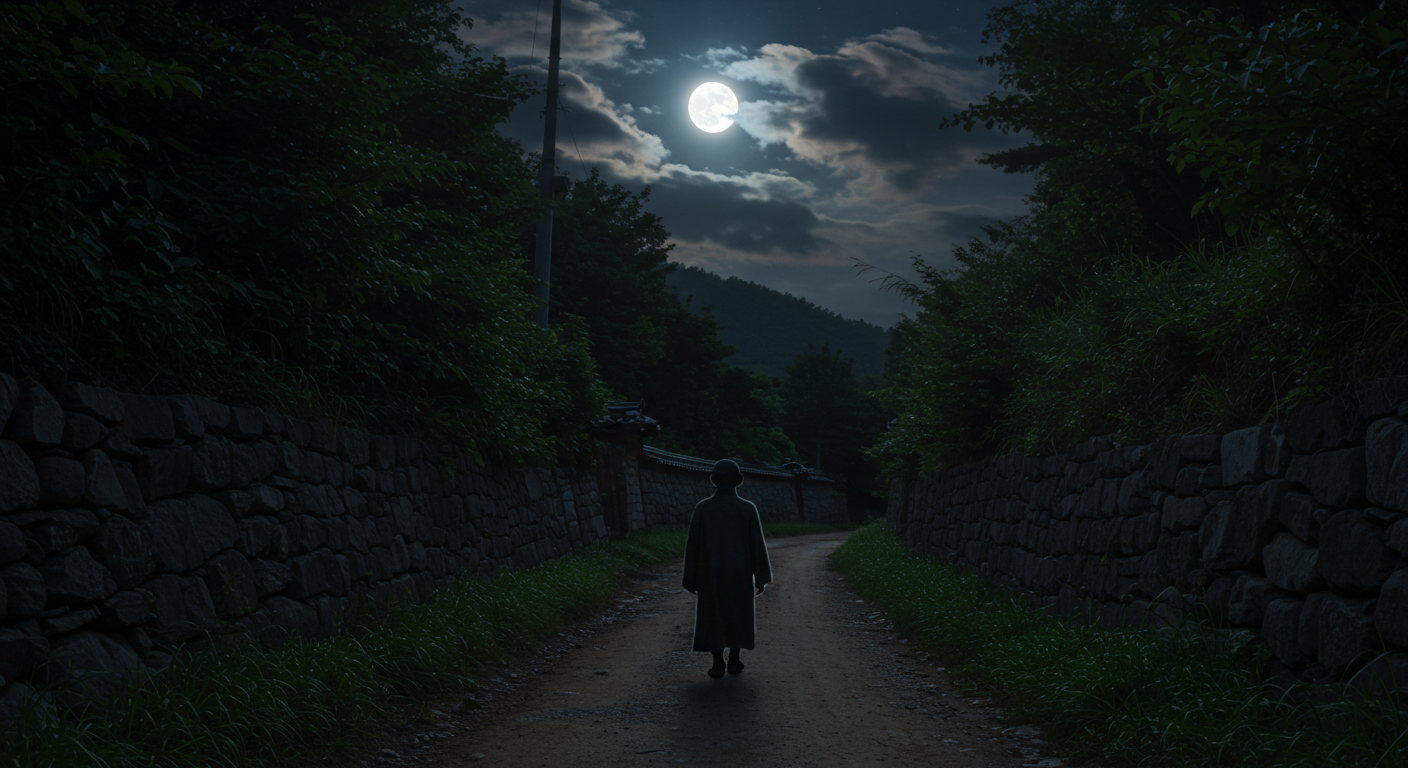
Imagine walking alone on a narrow dirt road at night, the moon half-hidden behind drifting clouds. The night air feels heavy, and every rustle in the grass makes you turn your head. In old Korea, people believed these moments were never truly empty. Somewhere in the shadows, a pair of mischievous eyes might be watching you — belonging to a dokkaebi (도깨비).
달빛이 구름에 가려진 늦은 밤, 좁은 흙길을 혼자 걸어가고 있다고 상상해 보세요. 바람이 스치며 풀잎이 흔들릴 때마다 고개를 돌리게 되는 순간, 옛사람들은 그 적막이 결코 비어 있지 않다고 믿었습니다. 어둠 속 어딘가에서 장난기 어린 눈빛이 당신을 지켜보고 있을지 모릅니다. 바로 도깨비 말이지요.
Unlike the frightening monsters of the West, dokkaebi were never purely evil. They were tricksters — playful, unpredictable, sometimes bothersome, yet oddly fair. They might borrow your shoes, block your path with a challenge, or play pranks deep into the night. But they could also reward kindness, bringing food, wealth, or even protection to those who treated them with respect.
서양의 괴물들과 달리 도깨비는 결코 완전히 사악한 존재가 아니었습니다. 그들은 장난꾸러기였지요 — 예측할 수 없고 때로는 성가시지만, 의외로 공정한 면도 가진 존재였습니다. 신발을 훔쳐 가거나 길을 막고 씨름을 걸어오기도 했고, 한밤중에 짓궂은 장난을 치기도 했습니다. 그러나 동시에 친절한 이에게는 음식을 주거나 재물을 안겨 주고, 때로는 보호까지 해주기도 했습니다.
Even today, dokkaebi remind us that the world has always been filled with unseen forces — playful, mysterious, and just a little bit magical.
오늘날에도 도깨비는 우리에게 말해 줍니다. 세상은 눈에 보이는 것만으로 이루어지지 않았으며, 언제나 장난스럽고, 신비롭고, 조금은 마법 같은 힘들로 가득 차 있다는 사실을요.
2. Origin & History / 기원과 역사
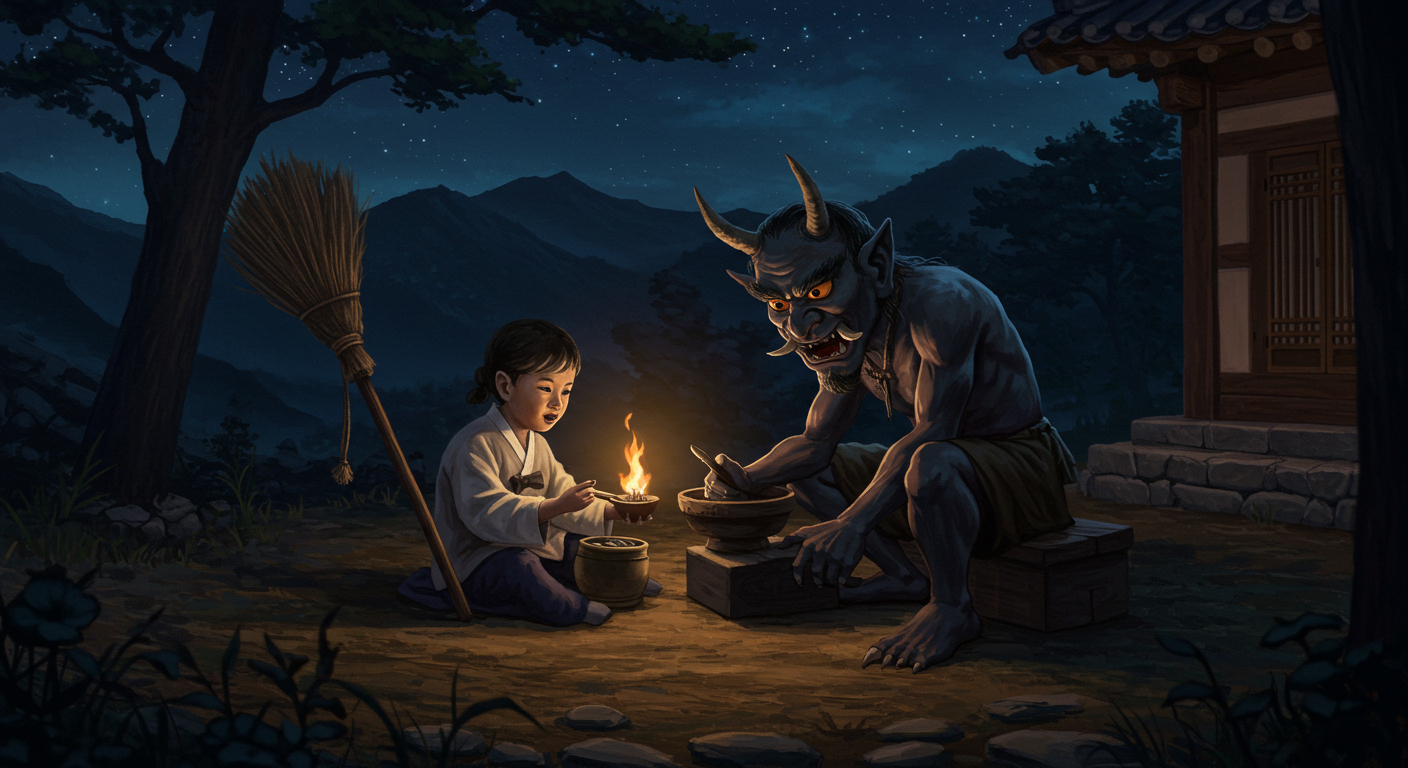
Long before televisions and smartphones, storytelling was the heart of evening life. As dusk settled, families gathered beneath the dim glow of an oil lamp. Elders would clear their throats and begin: tales of hidden spirits, mischievous beings, and strange lights in the distance. Children huddled close, both frightened and fascinated, while adults nodded knowingly — for everyone had heard whispers of the dokkaebi.
텔레비전이나 스마트폰이 없던 시절, 이야기 자체가 저녁의 가장 큰 즐거움이었습니다. 해가 지고 등잔불이 희미하게 빛나면 가족들이 둘러앉아 귀를 기울였습니다. 어른들은 목소리를 낮추어 신비로운 존재와 장난스러운 요괴, 밤길에 나타나는 기묘한 불빛 이야기를 들려주었지요. 아이들은 두려움과 호기심으로 눈을 크게 떴고, 어른들조차도 고개를 끄덕이며 들어올 만큼 도깨비 이야기는 보편적이었습니다.
The origins of dokkaebi can be traced back to Korea’s Three Kingdoms period (about 1,900~1,300 years ago, 삼국시대). Unlike ghosts that came from the dead, dokkaebi were believed to be spirits born from objects — old farming tools, worn-out household items, or discarded brooms that somehow gained life of their own. This reflected a uniquely Korean imagination: that even the most ordinary object could cross into the realm of the supernatural.
도깨비의 기원은 **삼국시대(약 1,900~1,300년 전)**까지 거슬러 올라갑니다. 죽은 자의 혼령에서 비롯된 귀신과 달리, 도깨비는 오래 쓰다 버려진 농기구, 낡은 생활 도구, 빗자루 같은 물건에서 영혼이 생겨난 존재로 여겨졌습니다. 이는 평범한 일상의 사물조차도 영적 세계와 이어질 수 있다는 한국 특유의 상상력을 잘 보여줍니다.
As centuries passed, these tales spread across villages, carried in the songs of farmers, the jokes of merchants, and the whispers of travelers at night. Farmers spoke of flickering lights on ridges; travelers told of strange figures that blocked mountain passes and demanded a wrestling match. Each retelling reshaped the dokkaebi, turning them into beings who embodied both humor and warning, danger and delight.
세월이 흐르면서 도깨비 이야기는 농부의 노래, 장터 상인의 농담, 밤길 나그네의 속삭임을 타고 마을마다 퍼져 나갔습니다. 들판의 불빛을 본 농부의 이야기, 고개에서 도깨비가 씨름을 걸어왔다는 나그네의 경험담이 이어지며, 도깨비는 점점 웃음과 경계심, 위험과 즐거움을 동시에 품은 존재로 자리 잡게 되었습니다.
By the time of the Joseon Dynasty, dokkaebi had become cultural icons. They appeared in folktales as tricksters who punished greed and rewarded kindness, serving as moral mirrors for the community. Through them, people found lessons hidden in laughter.
조선시대에 이르러 도깨비는 문화적 아이콘이 되었습니다. 민담 속 도깨비는 욕심 많은 이를 벌하고, 선한 이에게는 뜻밖의 복을 내렸습니다. 그들은 공동체에 도덕적 교훈을 전하는 거울 같은 존재였으며, 웃음 속에 인생의 교훈을 담아내는 장치였습니다.
Yet, not all that we believe about dokkaebi today is accurate. Many confuse the grimacing roof tiles called gwimyeonwa (귀면와) with “dokkaebi tiles,” though their origin lies in Buddhist architecture meant to ward off evil, not in goblin lore. The horned, fierce-looking image of dokkaebi that we recognize today also owes much to Japan’s oni (おに), introduced during the colonial period through school textbooks.
하지만 오늘날 우리가 알고 있는 도깨비에 대한 모든 이미지가 사실은 아닙니다. 많은 사람들이 귀면와(鬼面瓦)를 도깨비기와라 부르지만, 사실 그것은 도깨비가 아니라 잡귀를 막기 위해 만들어진 불교 건축 장식입니다. 또한 뿔 달린 무서운 모습의 도깨비 형상은 일제강점기 교과서 속 **일본 오니(おに)**의 이미지가 차용되면서 자리 잡게 된 것입니다.
Ultimately, the history of dokkaebi is not fixed but fluid — shaped by centuries of storytelling, misinterpretation, and reinvention. From ancient farming villages to Joseon folktales, and even through colonial distortions, the dokkaebi endured as a being forever adapting to the imagination of the people.
결국 도깨비의 역사는 고정된 것이 아니라 유동적이었습니다. 수백 년 동안의 구전과 전승, 때로는 오해와 왜곡, 그리고 재창조 과정을 거치며 만들어진 것이지요. 삼국시대 농경 사회에서, 조선시대 민담에서, 심지어 일제강점기의 문화 왜곡 속에서도 도깨비는 사람들의 상상력에 맞춰 끊임없이 변화하며 살아남았습니다.
3. Appearance & Characteristics / 외형과 특징

Ask ten people to describe a dokkaebi, and you might hear ten different answers. Some imagine a small goblin with horns, others picture a large, comical figure carrying a club. The truth is, dokkaebi never had a single fixed image — they changed shape depending on who told the story and where it was told.
사람 열 명에게 도깨비의 모습을 묻는다면, 열 가지 다른 대답이 돌아올지도 모릅니다. 어떤 이는 뿔이 난 작은 요괴를, 또 어떤 이는 방망이를 든 커다란 장난꾸러기를 떠올립니다. 실제로 도깨비는 시대와 지역, 이야기꾼에 따라 그 형상이 끊임없이 바뀌어 왔습니다.
Still, a few features often stood out. The most famous is the dokkaebi bangmangi (도깨비 방망이) — a magical club said to summon anything its owner desired. With a swing of this stick, food, gold, or even entire feasts could appear. Yet, just like the dokkaebi, the bangmangi was mischievous: sometimes it granted nothing, or punished the greedy with tricks.
그래도 몇 가지 특징은 공통적으로 전해졌습니다. 대표적인 것이 바로 도깨비 방망이입니다. 휘두르면 금은보화와 진수성찬을 불러낸다고 했지만, 욕심 많은 이에게는 장난을 치며 아무것도 내놓지 않거나 도리어 곤란에 빠뜨리기도 했습니다.
Another curious object tied to dokkaebi is the broom (빗자루). Countless folktales tell of men who wrestled with a dokkaebi all night, finally tying it to a tree at dawn — only to return the next morning and find a bloodstained broom bound there instead. Such stories suggested that ordinary objects could reveal extraordinary spirits.
도깨비와 관련된 또 다른 흥미로운 물건은 빗자루입니다. 전국 곳곳에서 전해지는 설화 속에는, 한 사내가 밤새 도깨비와 씨름을 벌이다가 결국 쓰러뜨리고 나무에 묶어두었는데, 다음 날 아침에 가 보니 도깨비 대신 피 묻은 빗자루가 묶여 있었다는 이야기가 있습니다. 이런 전승은 일상의 평범한 물건조차 영적인 힘을 품을 수 있다는 믿음을 보여줍니다.
Their appearance was often exaggerated for humor: crooked teeth, clumsy postures, brightly patterned clothes. Some were described as tall as village totems, others like strong farmhands wearing straw hats. Their skin tones, too, varied in imagination — sometimes as dark as shadows, sometimes glowing red like burning embers.
도깨비의 외모는 웃음을 자아내도록 과장되곤 했습니다. 삐뚤빼뚤한 이빨, 어설픈 걸음걸이, 알록달록한 옷차림으로 묘사되기도 했습니다. 어떤 이들은 장승처럼 우람한 존재로, 또 어떤 이들은 패랭이를 쓴 건장한 머슴처럼 그려냈습니다. 얼굴빛은 검은 그림자처럼 칠흑같기도 하고, 불길처럼 붉게 달아오르기도 했다고 전해집니다.
Beyond appearances, what defined them most was their personality. Dokkaebi loved games, especially wrestling and drinking. Folktales tell of them challenging travelers on mountain roads: if you won, you could gain unexpected wealth; if you lost, you might be humiliated. Some tales even claimed that to defeat a dokkaebi, you had to trip it with your left leg — for they were sometimes called dokgak-gwi (독각귀, one-legged goblins).
그러나 도깨비의 진짜 매력은 외모가 아니라 성격에 있었습니다. 도깨비는 놀이를 좋아했는데, 특히 씨름과 술을 즐겼습니다. 민담 속 도깨비는 밤길에서 나그네를 붙잡고 씨름을 걸었고, 이기면 재물을 얻었지만 지면 큰 망신을 당했습니다. 또 어떤 전승에서는 “도깨비는 한쪽 다리가 헛다리라서, 반드시 왼쪽다리로 걸어야 이긴다”는 말이 전해지며, 이 때문에 도깨비를 **독각귀(獨脚鬼, 외다리 귀신)**라 부르기도 했습니다.
This playful unpredictability — part humor, part menace — is what made the dokkaebi unforgettable.
이렇듯 웃음과 두려움 사이를 오가는 장난스러움이야말로, 도깨비를 한국인의 기억 속에 지워지지 않는 존재로 남게 만든 힘이었습니다.
4. Dokkaebi Fire / 도깨비 불
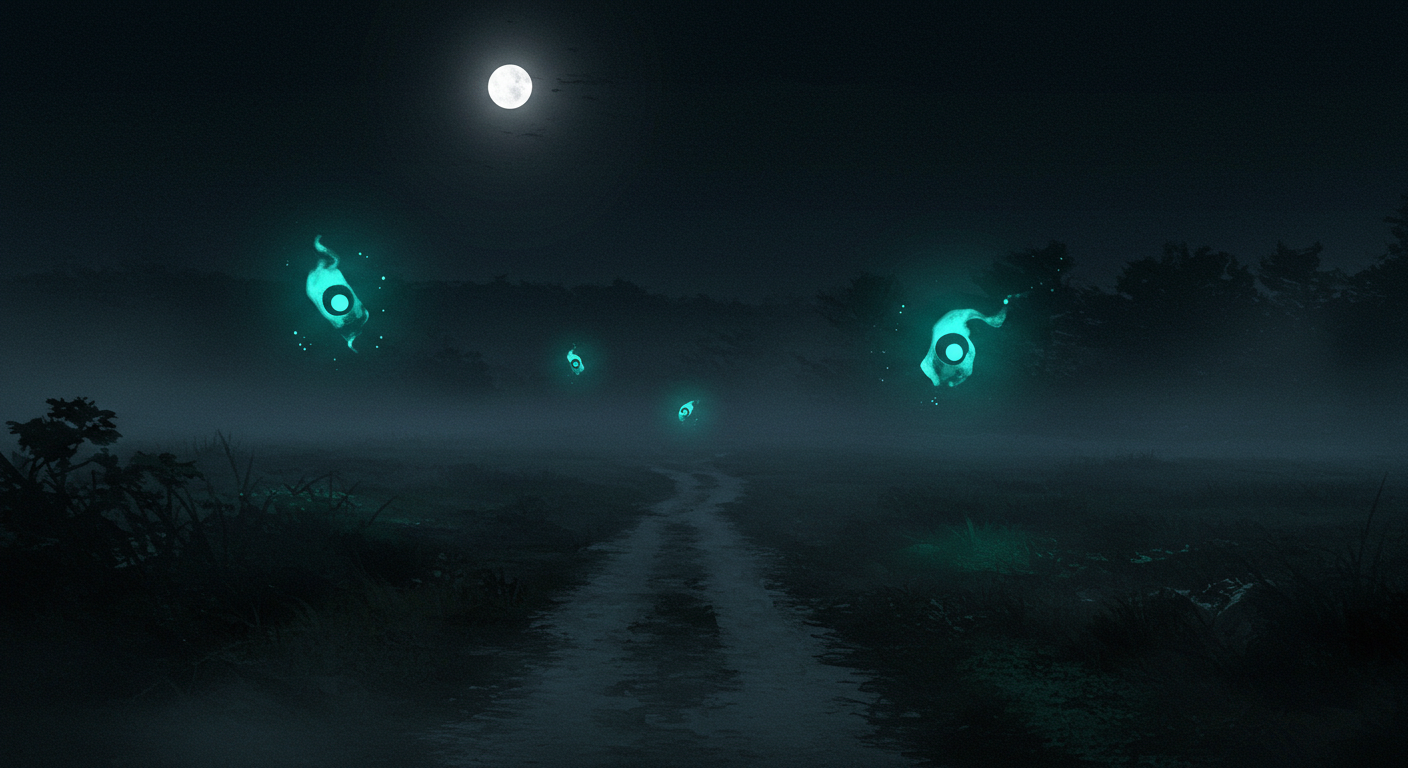
On moonless nights, travelers often spoke of strange flickers of light dancing in the distance. These were called dokkaebi fire — eerie flames said to appear where no torch was lit. People whispered that they were signs of mischievous spirits, a warning that the path ahead was not what it seemed.
달빛조차 사라진 어두운 밤, 나그네들은 종종 멀리서 깜빡이며 춤추는 불빛을 보았다고 전했습니다. 사람들은 그것을 도깨비 불이라 불렀습니다. 아무도 등불을 켜지 않았는데 나타나는 섬뜩한 불꽃, 그것은 장난스러운 도깨비가 내는 신호이며 “앞길이 심상치 않다”는 경고라고 믿었습니다.
Stories often placed dokkaebi fire in unsettling places — lonely mountain trails, quiet graveyards, or misty fields at night. To villagers, these lights were more than natural curiosities; they were encounters with the unseen world.
민담 속 도깨비 불은 으슥한 곳에서 자주 등장했습니다. 깊은 산길, 적막한 무덤가, 안개가 자욱한 들판에서 나타나는 불빛은 단순한 자연 현상이 아니라, 보이지 않는 세계와 마주한 징조로 여겨졌습니다. 그래서 도깨비 불을 본 이는 “오늘 밤은 평범하지 않다”는 두려움과 경외심을 동시에 느꼈습니다.
Today, science explains these lights as phosphorescence, swamp gases, or natural combustions. But for our ancestors, the explanation mattered less than the meaning. The mysterious glow symbolized the playful yet ominous presence of dokkaebi — a reminder that the world was alive with forces beyond human sight.
오늘날 과학은 이런 불빛을 인광, 늪지에서 발생하는 가스 연소, 혹은 자연 발화 현상으로 설명합니다. 그러나 조상들에게 중요한 것은 원인이 아니라 의미였습니다. 그 불빛은 도깨비의 장난스러운 기운이자 동시에 불길한 징조였으며, 세상에는 눈으로 볼 수 없는 힘이 존재한다는 사실을 상기시키는 신호였습니다.
Interestingly, Korea is not alone in telling such stories. In Europe, travelers feared the Will-o’-the-wisp — ghostly swamp lights said to lure people astray. Though oceans apart, both cultures used mysterious lights to explain the unknown and to caution against wandering too far into the dark.
흥미롭게도 이런 이야기는 한국만의 것이 아닙니다. 유럽에서는 **윌 오 더 위스프(Will-o’-the-wisp)**라 불리는 불빛 전설이 전해집니다. 늪지에서 떠오르는 푸른 불빛이 사람들을 길에서 벗어나 헤매게 만든다고 믿었지요. 바다 건너 다른 대륙의 이야기지만, 한국과 유럽 모두 어두운 길 위의 불빛을 경계와 신비의 상징으로 사용했다는 점은 매우 흥미롭습니다.
5. Cultural Role / 문화적 의미
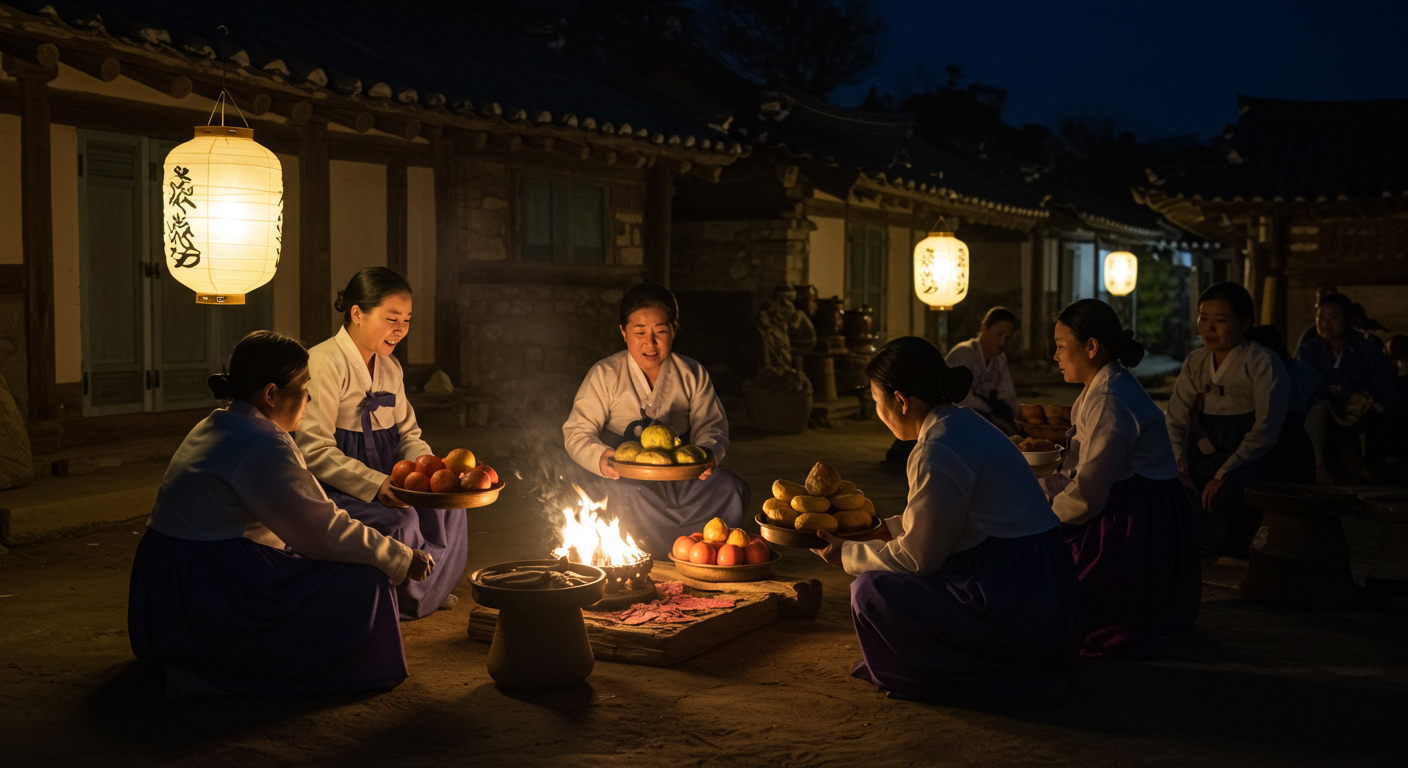
In the flicker of a village fire, stories of dokkaebi were never told just for fear. They carried lessons. When elders spoke of a greedy man tricked by a dokkaebi, children understood that selfishness had consequences. When they heard of a kind traveler rewarded with treasure, they learned that kindness mattered even in the unseen world.
마을의 모닥불 옆에서 전해지던 도깨비 이야기는 단순한 공포담이 아니었습니다. 그것은 늘 교훈을 담은 이야기였습니다. 욕심 많은 자가 도깨비에게 속아 망신을 당하는 이야기에서는 ‘탐욕은 화를 부른다’는 교훈을, 착한 나그네가 도깨비에게서 보물을 얻는 이야기에서는 ‘선행은 반드시 보답을 받는다’는 지혜를 전했습니다.
Dokkaebi also reflected the hopes and fears of everyday people. Farmers imagined them wrestling in the fields at night, a playful echo of their own struggles. Travelers feared their tricks on dark roads, yet these tales made the journey less lonely — as if unseen companions walked beside them.
도깨비는 또한 민중의 희망과 두려움을 그대로 비추는 거울이었습니다. 농부들은 밤마다 들판에서 씨름을 벌이는 도깨비를 상상하며, 그것을 자신의 삶의 고단함과 겹쳐 보았습니다. 나그네들은 어두운 길에서 도깨비의 장난을 두려워했지만, 동시에 이야기를 통해 외롭지 않음을 느꼈습니다. 마치 보이지 않는 동행이 옆에서 함께 걸어주는 듯했지요.
Beyond folklore, dokkaebi were also worshiped in folk rituals. In coastal villages, fishermen held small ceremonies called dokkaebi-gosa to pray for a good catch, believing the goblins could herd fish into their nets. In parts of Jeolla Province, people performed dokkaebi-je to ward off fire or disease, sometimes led entirely by women. On Jeju Island, the ritual play called Yeonggam-nori portrayed dokkaebi as drunken old men who demanded alcohol — showing both fear and humor in how people related to them.
도깨비는 단순한 이야기 속 인물에 그치지 않고, 민속 신앙의 대상이 되기도 했습니다. 서해와 남해의 어촌에서는 도깨비에게 제물을 바치는 ‘도깨비 고사’를 지내며 풍어를 기원했습니다. 전라도 일부 마을에서는 화재와 전염병을 막기 위해 ‘도깨비제’를 열었는데, 특히 여성이 주관하는 독특한 의례였습니다. 제주도에서는 ‘영감놀이’라는 굿놀이를 통해 술을 좋아하는 도깨비가 등장했는데, 이는 도깨비가 사람들과 얼마나 밀접하게 상상 속에서 살아 있었는지를 잘 보여줍니다.
More than just folklore, dokkaebi became moral mirrors and cultural companions. They reminded communities that balance mattered: greed leads to loss, kindness leads to gain. Through stories and rituals alike, people found a way to explain life’s unpredictability — not with despair, but with humor, caution, and wisdom.
도깨비는 결국 단순한 민담 속 인물이 아니라, 도덕적 거울이자 공동체적 동반자였습니다. 탐욕은 잃음을 부르고, 선행은 복을 부른다는 사실을 상기시키며, 사람들은 그들을 통해 인생의 예측 불가능함을 유머와 지혜로 풀어냈습니다. 그래서 도깨비는 두려움과 웃음, 제의와 놀이, 교훈과 희망이 모두 뒤섞인 독특한 문화적 상징으로 자리 잡을 수 있었습니다.
6. Modern Adaptation / 현대적 재해석
For centuries, dokkaebi lived in whispered folktales and campfire stories, their presence carried in the hushed voices of elders and the imaginations of children. But in the 20th and 21st centuries, they stepped into a brighter spotlight — appearing not only in oral tradition, but in printed textbooks, comic books, television dramas, video games, and global pop culture.
수 세기 동안 도깨비는 오직 민담과 모닥불 옆의 이야기 속에서만 살아 있었습니다. 그러나 20세기 이후 도깨비는 구전에서 벗어나 교과서, 삽화, 만화책, TV 드라마, 게임, 그리고 글로벌 대중문화 속으로 등장하며 새로운 생명을 얻게 되었습니다.
One turning point was the early 20th century, when Japanese colonial-era textbooks depicted goblins through the borrowed image of the Japanese oni. This began to shape the horned, fierce-looking figure many still recognize today. Later, Korean illustrators reimagined dokkaebi with comical features — short pants, crooked teeth, and colorful outfits — making them less terrifying and more approachable for children’s books.
20세기 초, 일제강점기 교과서에 일본 *오니(おに)*의 이미지가 차용되면서 뿔 달린 도깨비의 모습이 굳어지기 시작했습니다. 이후 한국 삽화가들은 반바지를 입고 우스꽝스러운 표정을 지닌 도깨비를 동화책 속에 그려 넣으며, 아이들에게 무서움보다는 친근함을 주는 존재로 재탄생시켰습니다.
Perhaps the most famous modern portrayal is the 2016 K-Drama “Goblin (도깨비)”. Here, the dokkaebi was no longer a comic trickster with a club, but an immortal guardian — tragic, romantic, and deeply human. The drama swept across Asia and beyond, proving that a centuries-old goblin could transform into a global cultural icon.
현대에 들어 가장 대표적인 도깨비의 재해석은 2016년 방영된 K-드라마 *<도깨비>*입니다. 이 작품에서 도깨비는 더 이상 방망이를 든 우스꽝스러운 요괴가 아니라, 영원을 사는 수호자이자, 비극적이면서도 낭만적인 인간적 존재로 등장했습니다. 드라마는 아시아 전역을 넘어 전 세계에서 큰 인기를 얻으며, 고대 설화 속 존재가 현대 글로벌 문화 아이콘이 될 수 있음을 입증했습니다.
Beyond dramas, dokkaebi also appear in webtoons and video games, often reimagined as fierce warriors, cunning tricksters, or even lovable mascots. In each medium, they gain new layers of meaning — proving that folklore is never static but evolves with the people who tell it.
드라마를 넘어, 도깨비는 웹툰과 비디오 게임 속에서 용맹한 전사, 교활한 트릭스터, 혹은 사랑스러운 마스코트로 재해석되고 있습니다. 매체가 바뀔 때마다 새로운 얼굴을 얻는 도깨비는, 민속이 결코 고정된 것이 아니라 사람들의 상상력과 함께 끊임없이 변화한다는 사실을 보여줍니다.
In today’s K-Culture, the dokkaebi has become more than a relic of folklore. It is a bridge between Korea’s past and present, a symbol that carries ancient imagination into modern creativity — and shares it with the world.
오늘날 K-컬처 속에서 도깨비는 더 이상 옛 민담의 잔재가 아닙니다. 그것은 과거와 현재를 잇는 다리이며, 한국의 상상력을 현대적 창의성으로 이어 세계와 나누는 문화적 상징이 되었습니다.
7. Conclusion / 결론
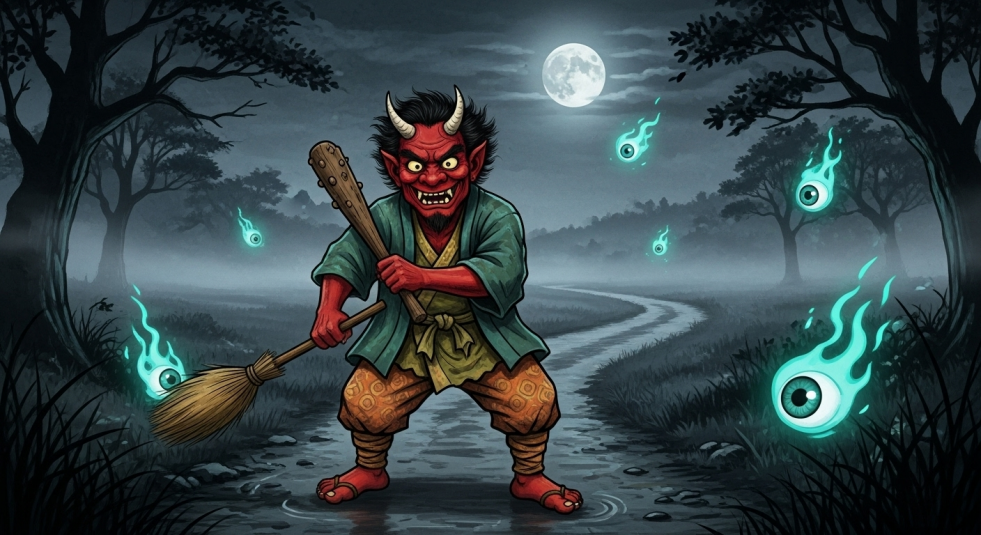
From the shadowy paths of old villages to the bright screens of modern dramas, the dokkaebi has never truly disappeared. It has shifted shapes — from a mischievous trickster with a magic club, to a mysterious fire flickering in the dark, and now to a global cultural icon in K-Drama and beyond.
옛 마을의 어두운 산길에서부터 오늘날 드라마와 웹툰의 화려한 스크린에 이르기까지, 도깨비는 결코 사라진 적이 없습니다. 방망이를 든 장난꾸러기에서, 밤길을 비추는 도깨비 불로, 그리고 지금은 K-드라마 속 전 세계인이 사랑하는 문화 아이콘으로 변모하며 모습만 달리했을 뿐 늘 우리 곁에 존재해왔습니다.
What makes the dokkaebi remarkable is not just its tricks or its fire, but its ability to adapt. Each generation retold the stories in ways that reflected their fears, their hopes, and their humor. And in doing so, the dokkaebi became more than folklore — it became part of Korea’s cultural DNA.
도깨비가 특별한 이유는 단지 장난이나 불빛 때문이 아닙니다. 시대마다 변화하는 힘, 바로 그것이 도깨비의 진정한 매력입니다. 각 세대는 자신들의 두려움, 희망, 웃음을 담아 도깨비 이야기를 다시 썼고, 그 결과 도깨비는 단순한 설화를 넘어 한국 문화의 DNA가 되었습니다.
Today, when people around the world watch a K-Drama or read a webtoon about dokkaebi, they are connecting not just with a story, but with centuries of imagination carried forward into the present.
오늘날 전 세계 사람들이 도깨비가 등장하는 K-드라마를 보거나 웹툰을 읽을 때, 그들은 단순히 한 편의 이야기를 접하는 것이 아닙니다. 수백 년 동안 이어져 온 한국인의 상상력과 세계관을 함께 경험하는 것이지요.
So the next time you hear the word “dokkaebi,” remember — it’s not only a goblin from the past, but a timeless spirit still dancing between shadows and light, reminding us that life is never ordinary.
그러니 다음에 “도깨비”라는 단어를 들을 때는 꼭 기억해 주세요. 그것은 과거의 요괴만이 아니라, 빛과 그림자 사이에서 여전히 춤추는 영원한 존재이며, 우리의 삶이 결코 평범하지 않음을 일깨워주는 상징입니다.
'K-History & Tradition' 카테고리의 다른 글
| Why Did Tigers Disappear from Korea? / 한국에서 호랑이가 사라진 이유 (1) | 2025.09.23 |
|---|---|
| Gumiho (구미호) — The Nine-Tailed Fox, A K-Culture Icon (1) | 2025.09.18 |
| Jeoseungsaja(저승사자): The Korean Grim Reaper — From Folklore to K-Drama & K-Demon (0) | 2025.09.10 |


